Tuesday, January 22

Announcement: Don't forget to check the post for details on Winter Ball here.

TODAY:

Poetic Device QUIZ

Finishing touches on Poetry Presentations

FYI:
  • Wednesday - Poetry Presentations begin
  • Thursday - Memorization QUIZ (Stanzas 1-2)

If you can keep your head when all about you   
    Are losing theirs and blaming it on you,   
If you can trust yourself when all men doubt you,
    But make allowance for their doubting too;   
If you can wait and not be tired by waiting,
    Or being lied about, don’t deal in lies,
Or being hated, don’t give way to hating,
    And yet don’t look too good, nor talk too wise:

If you can dream—and not make dreams your master;   
    If you can think—and not make thoughts your aim;   
If you can meet with Triumph and Disaster
    And treat those two impostors just the same;   
If you can bear to hear the truth you’ve spoken
    Twisted by knaves to make a trap for fools,
Or watch the things you gave your life to, broken,
    And stoop and build ’em up with worn-out tools:

Block Day, January 17

TODAY:

Memorization QUIZ

Poetic Devices
  • iambic pentameter - a line of poetry with 5 stressed syllables each followed by an unstressed syllable
  •  couplet - two lines, one after the other that contain end rhyme
  •  slant rhyme - rhyme in which the vowel sounds are nearly, but not exactly the same

Shall I compare thee to a summer’s day? (Sonnet 18)


Shall I compare thee to a summer’s day?
Thou art more lovely and more temperate.
Rough winds do shake the darling buds of May,
And summer’s lease hath all too short a date.
Sometime too hot the eye of heaven shines,
And often is his gold complexion dimmed;
And every fair from fair sometime declines,
By chance, or nature’s changing course, untrimmed;
But thy eternal summer shall not fade,
Nor lose possession of that fair thou ow’st,
Nor shall death brag thou wand’rest in his shade,
When in eternal lines to Time thou grow’st.
     So long as men can breathe, or eyes can see,
     So long lives this, and this gives life to thee.
 
 
Work on Poetry Presentations 

FYI:
  • No school on Monday, January 21
  • Poetic Device QUIZ on Tuesday, January 22 
  • Poetry Presentations begin on Wednesday, January 23
  • Memorization QUIZ (Stanzas 1-2) on Thursday, January 24
If you can keep your head when all about you   
    Are losing theirs and blaming it on you,   
If you can trust yourself when all men doubt you,
    But make allowance for their doubting too;   
If you can wait and not be tired by waiting,
    Or being lied about, don’t deal in lies,
Or being hated, don’t give way to hating,
    And yet don’t look too good, nor talk too wise:

If you can dream—and not make dreams your master;   
    If you can think—and not make thoughts your aim;   
If you can meet with Triumph and Disaster
    And treat those two impostors just the same;   
If you can bear to hear the truth you’ve spoken
    Twisted by knaves to make a trap for fools,
Or watch the things you gave your life to, broken,
    And stoop and build ’em up with worn-out tools:
Wednesday, January 16 ~ Be ready to present in a week!

TODAY:

You have the entire period to work on your poetry presentations.
I will visit each group to assess progress. Yes, progress is graded.

FYI:
Poetic Device QUIZ on Tuesday, January 22
Memory QUIZ tomorrow


If you can keep your head when all about you   
    Are losing theirs and blaming it on you,   
If you can trust yourself when all men doubt you,
    But make allowance for their doubting too;   
If you can wait and not be tired by waiting,
    Or being lied about, don’t deal in lies,
Or being hated, don’t give way to hating,
    And yet don’t look too good, nor talk too wise:

Tuesday, January 15 ~

EQ: What is enjambment?

WARM UP:
Who vs Whom

TODAY:
Work on your presentations

FYI: The memorization quiz has been moved to Thurs., along with the poetic device quiz.


Monday, January 14 ~ Figure on using a lot of figurative language

EQ:What is enjambment?

WARM UP:
Lose vs. Loose

TODAY:

Enjambment
from a French word enjambment, means to step over or put legs across. In poetry it can be defined as a thought or sentence that does not come to an end at the line break but continues on to the next line.

Imagery
visually descriptive language.

Rhyme Scheme
the ordered pattern of rhymes at the end of the lines

I Wandered Lonely as a Cloud by William Wordsworth
I wandered lonely as a cloud
That floats on high o'er vales and hills,
When all at once I saw a crowd,
A host, of golden daffodils;
Beside the lake, beneath the trees,
Fluttering and dancing in the breeze.
For oft, when on my couch I lie
In vacant or in pensive mood,
They flash upon that inward eye
Which is the bliss of solitude;
And then my heart with pleasure fills,
And dances with the daffodils.
 

Example:
Stanza 1 - If
If you can keep your head when all about you >>>>>>>>>>>>(NOTICE the enjambment?)
 Are losing theirs and blaming it on you,
If you can trust yourself when all men doubt you,
 But make allowance for their doubting too.
If you can wait and not be tired by waiting,
 Or being lied about, don't deal in lies,
Or being hated, don't give way to hating,
 And yet don't look too good, nor talk too wise:

QUIZ on Wed.

  • Work on presentations.
HOMEWORK: Study for Poetic Device QUIZ and Memorization QUIZ.


Block Day, January 10 & 11 ~ Poetry captures our values...."If"

 EQ: Why memorize a poem?

WARM UP:
Lose and Loose

TODAY:

POETRY -Analysis and Memorization

"If" by Rudyard Kipling

If you can keep your head when all about you
 Are losing theirs and blaming it on you,
If you can trust yourself when all men doubt you,
 But make allowance for their doubting too.
If you can wait and not be tired by waiting,
 Or being lied about, don't deal in lies,
Or being hated, don't give way to hating,
 And yet don't look too good, nor talk too wise:

If you can dream—and not make dreams your master;
 If you can think—and not make thoughts your aim;
If you can meet with Triumph and Disaster,
 And treat those two impostors just the same;
If you can bear to hear the truth you've spoken
 Twisted by knaves to make a trap for fools,
Or watch the things you gave your life to, broken,
 And stoop and build 'em up with worn-out tools:

If you can make a heap of all your winnings
 And risk it on one turn of pitch-and-toss,
And lose, and start again at your beginnings
 And never breathe a word about your loss;
If you can force your heart and nerve and sinew
 To serve your turn long after they are gone,
And so hold on when there is nothing in you
 Except the Will which says to them: "Hold on!"

If you can talk with crowds and keep your virtue,
 Or walk with Kings—nor lose the common touch,
If neither foes nor loving friends can hurt you,
 If all men count with you, but none too much;
If you can fill the unforgiving minute
 With sixty seconds' worth of distance run,
Yours is the Earth and everything that's in it,
 And—which is more—you'll be a Man, my son!

Journal 3:

Analyze the poem:

1. Who is Kipling?
2. What is a stanza?
3. How many stanzas does If consist of?
4. What is the theme of the poem?
5. What rhyme scheme do you notice?
6. What is iambic pentameter?
7. What poetic devices do you notice?

Here is a Prezi on If that will answer the questions from above.

Can you do better?

You will show me through your very own analysis of a poem of your choosing. 

Here's the criteria:
  • Choose a partner
  • Choose a poem (must consist of at least 15 lines)
Here are a couple of sites to check out for a cool or interesting poem: 
Poetry Foundation                                   Academy of American Poets 
  • You will analyze your poem by exploring the poem's author, structure, form, theme, content, poetic devices, etc. All of these help to unlock the overall meaning behind the poem. 
  •  Choose your format for your presentation (digital, poster or other). Remember you and your partner are teaching the class. You're walking them through an analysis of a poem that they might not be familiar with, or perhaps they have never paid attention to the poems deeper meaning.
  • Presentation should be 5-7mins.
  • Due date: Jan. 23

The Quizlet below lists the poetic devices, as well as the poetic forms we will be learning in our poetry unit.  
Here is the quizlet list.

Here are a chosen few:
ALLITERATION -   
occurrence of the same letter or sound at the beginning or sound at the beginning of closely connected words
“The day to cheer and night's dank dew to dry,” (Spoken by Friar Lawrence in Act 2 at the beginning of Scene 3. This example shows four repetitions of “d.”)

 “Do not go gentle into that good night,
Old age should burn and rave at close of day;
Rage, rage, against the dying of the light.
Grave men, near death, who see with blinding sight,
Blind eyes could blaze like meteors and be gay,
Rage, rage against the dying of the light.”
(Do Not Go Gentle into the Good Night by Dylan Thomas)

DENOTATION -   
literal meaning of a word
 I wanted you to see what real courage is, instead of getting the idea that courage is a man with a gun in his hand. It’s when you know you’re licked before you begin, but you begin anyway and see it through no matter what.
(To Kill a Mockingbird by Harper Lee)
     In this denotation example, the character of Atticus Finch redefines the word “courage” for his children. Speaking against the popular belief that guns represent power and therefore courage, Atticus instead defines courage as the attempt to change things even knowing that there is no hope. This redefinition of the concept of courage shapes both the book and his children’s lives.
Connotation provides the basis for symbolic meanings of words because symbolic meanings of objects are different from their literal sense. Look at the following lines from Shakespeare’s play “As you Like It”:
“All the world’s a stage,
And all the men and women merely players;
They have their exits and their entrances;
And one man in his time plays many parts,”
     “A stage” connotes the world; “players” suggests human beings; and “parts” implies different stages of their lives.


FYI: Poetic Device QUIZ on Thurs., Jan. 17

What about memorizing If?

FYI: First stanza QUIZ on Wed., Jan. 16


HOMEWORK: STUDY POETIC DEVICES AND START MEMORIZING! 
****If your presentation requires art supplies, bring them Monday.  

Wednesday, January 9 ~ What is poetry?

EQ: What is poetry?

WARM UP:
There, Their, They're

TODAY:
      Agree/Disagree
      1. Poetry must rhyme to be good.
      2. Poetry is for expressing emotions.
      3. Poetry makes you sound "deep."
      4. Music lyrics classify as poetry.
      5. A poem always has a hidden meaning. 
      6. Poetry can be more powerful than a conversation.
      7. Society needs poets and poetry.
      8. Poetry helps shape our values.
Here are a couple of my favorites:

A Loaf of Poetry   
Image result for kneading dough

by Naoshi Koriyama

    you mix
    the dough
    of experience
    with
    the yeast
    of inspiration
    and knead it well
    with love
    and pound it
    with all your might
    and then
    leave it
    until
    it puffs out big
    with its own inner force
    and then
    knead it again
    and
    shape it
    into a round form
    and bake it
    in the oven
    of your heart
    ------------------
     
 
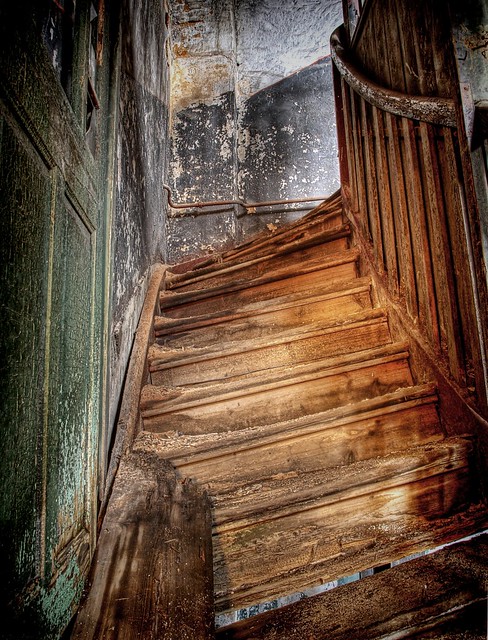
Mother to Son by Langston Hughes (Watch MLK read it here.)

Well, son, I'll tell you:
Life for me ain't been no crystal stair.
It's had tacks in it,
And splinters,
And boards torn up,
And places with no carpet on the floor—
Bare.
But all the time
I'se been a-climbin' on,
And reachin' landin's,
And turnin' corners,
And sometimes goin' in the dark
Where there ain't been no light.
So, boy, don't you turn back.
Don't you set down on the steps.
'Cause you finds it's kinder hard.
Don't you fall now—
For I'se still goin', honey,
I'se still climbin',
And life for me ain't been no crystal stair.

J2: What are your feelings on poetry? What do you like? What do you loathe? Do you have a favorite poet? Favorite poem? If so, share it with me. Have you written your own poetry? If so, share it with me.

HOMEWORK: NO!